Short essays on revenue systems, HubSpot, RevOps and AI written by the same operators who run the portals.
Not every B2B SaaS company needs the same thing from a RevOps partner. This guide breaks down what to look for at each stage, from early-stage process cleanup to growth-stage forecasting infrastructure to enterprise-level complexity, plus the questions that reveal whether a consultant actually understands where you are.
Read→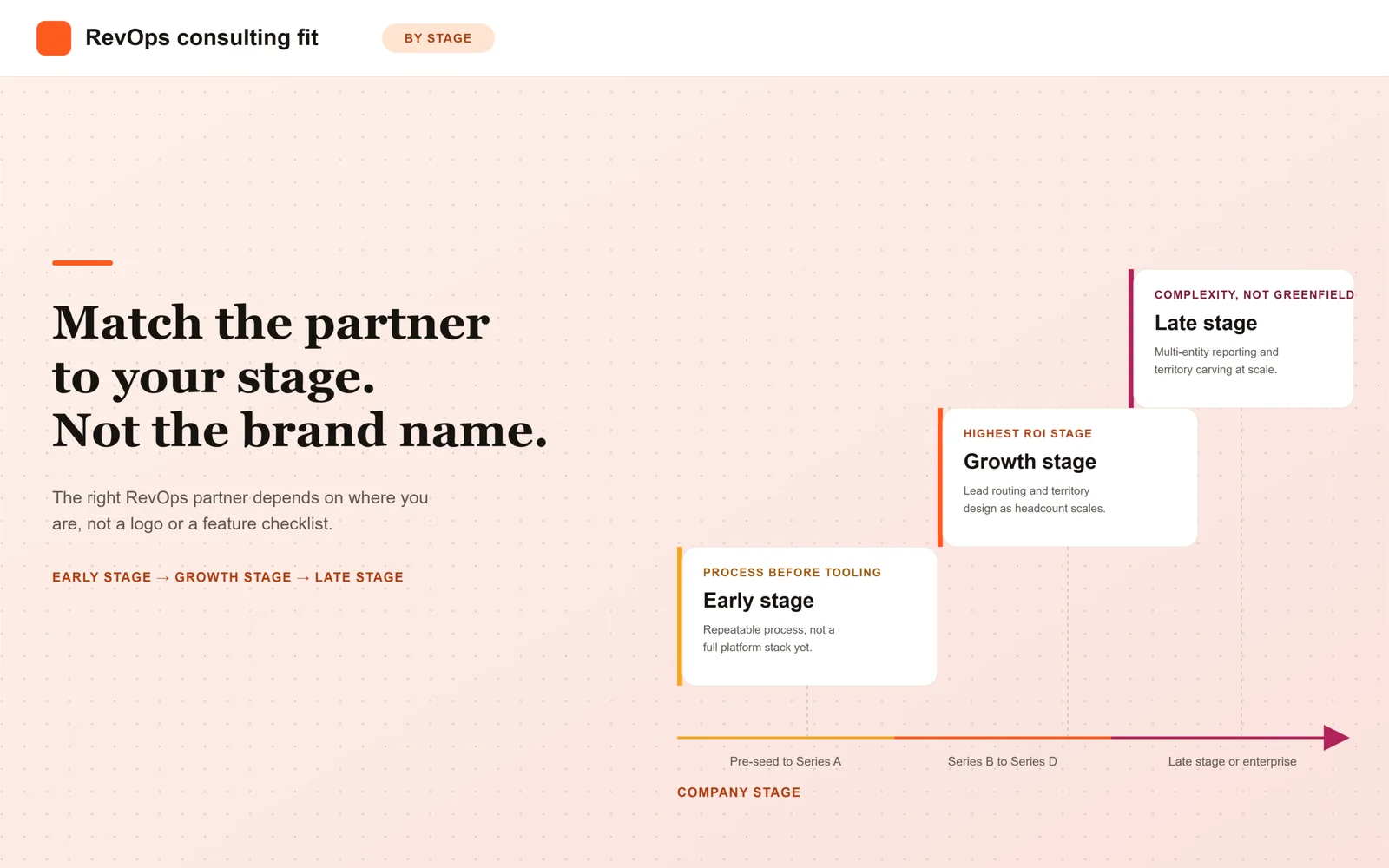
Confused about pipeline vs funnel? Learn the real difference, why it matters for forecasting, and how to use both without mixing up your data.
AI is now built into every CRM demo, but not every workflow benefits equally. Here’s where AI actually moves the needle for SaaS revenue teams, and where it’s still overhyped.
Learn what a go-to-market launch plan is, why it matters, and get a step-by-step checklist to launch your next product with confidence.
Most SaaS teams pick a CRM based on brand reputation. This guide breaks down the three layers you’re actually choosing between, how to match a platform to your growth stage, and what to ask before you commit.
New to HubSpot? Here’s a breakdown of what a workflow is, how triggers and actions work, and which plan you need to use one.
Choosing a revenue operations consulting partner? Here’s how Indian B2B SaaS growth teams can evaluate RevOps services from sales and marketing alignment to go-to-market strategy fit before signing an engagement.
Confused about GTM motions? Learn what PLG, sales-led, and hybrid go-to-market motions actually mean, and how to pick the right one for your stage.
Confused about RevOps vs business operations? Here’s a breakdown of what each function actually owns, and when you need one or both.
New to GTM strategy? Learn what product-led growth (PLG) means, how it differs from sales-led growth, and whether it fits your B2B company.
RevOps and a Chief Revenue Officer aren’t the same thing. Here’s how the function and the executive role fit together, and which one you need first.
Confused about HubSpot’s pricing tiers? Here’s what Free, Starter, and Professional actually include, and how to tell which one your team needs.
New to RevOps? Learn what a RevOps tech stack is, the core tool categories you need, and how to build one without wasting budget.
New to RevOps? Learn what CRM data enrichment is, why CRM records go stale so fast, and how enrichment helps sales teams sell smarter.
Learn what market segmentation is, the main types, and why it’s a foundational step for any B2B go-to-market strategy.
New to HubSpot? Here’s what each lifecycle stage means, when contacts move between them, and how to set yours up correctly.
Choosing a CRM today is really an automation decision. Here are the seven things to evaluate before you sign anything from starting with workflows instead of feature lists, to whether your sales team will actually use it.
There’s no single ‘best’ CRM for a scaling SaaS startup – there’s the one whose walls you won’t hit for the next two to three years. Here are the four walls every scaling team hits, and how to see them coming before you do.
Choosing a CRM at midmarket scale isn’t about features anymore. Here are the seven factors that actually separate revenue operations platforms once you’ve outgrown “which tool should we buy.”
Confused by TAM, SAM, and SOM? Here’s a plain-English breakdown with a real example, a step-by-step calculation method, and common mistakes to avoid.
Not sure if you need a RevOps hire yet? Here are 5 clear signs your revenue engine has outgrown ad hoc processes, plus what to do next.
Learn what pipeline coverage ratio means, the formula to calculate it, and realistic benchmarks by win rate, deal size, and sales cycle.
New to HubSpot admin? Here are 7 setup mistakes that quietly wreck your data and reporting, plus how to fix each one before it costs you.